Introduction: A New Generation, A New Job Market
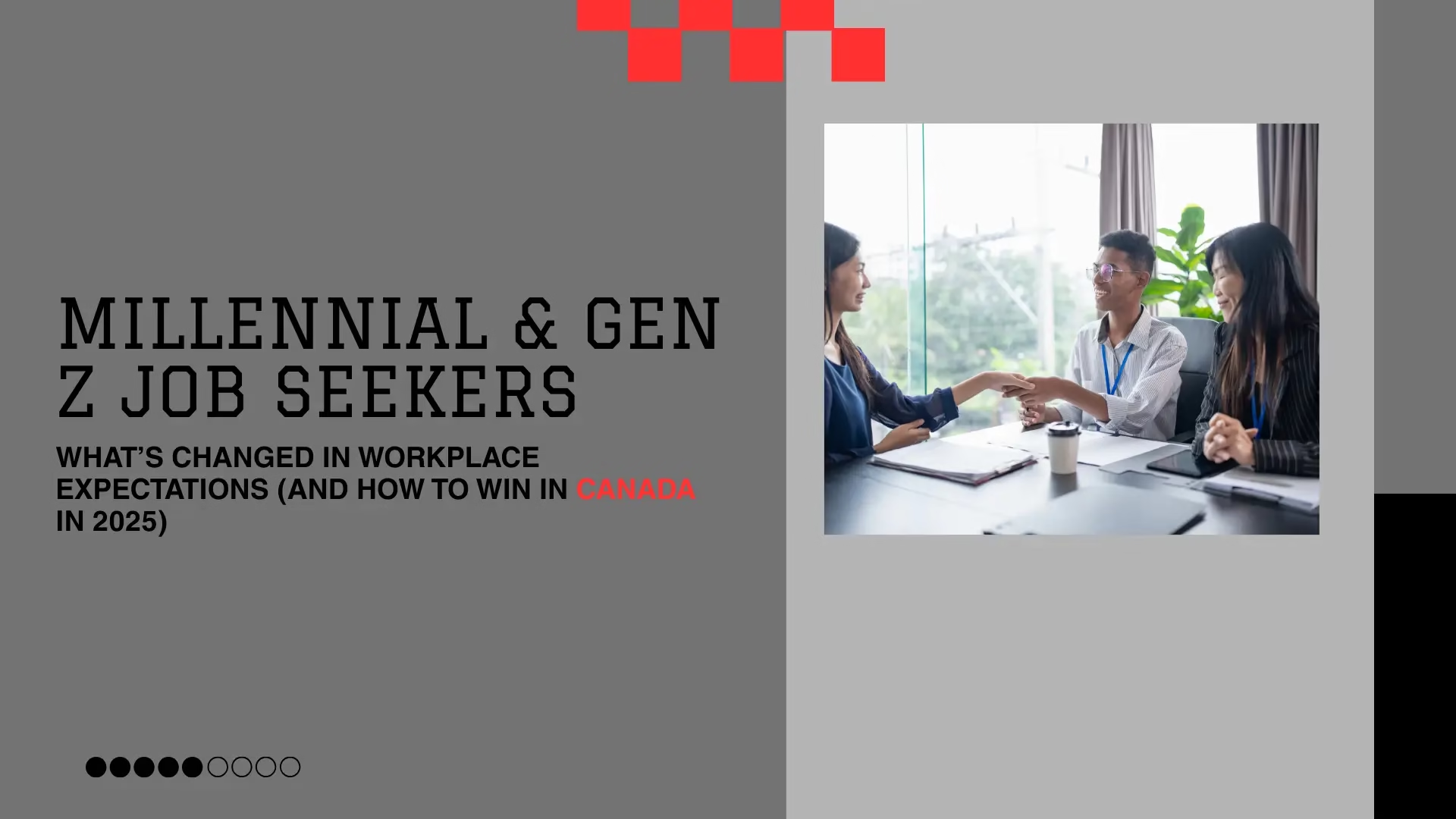
The Canadian job market in 2025 looks nothing like it did even five or ten years ago. Millennials now make up the largest segment of the workforce, while Gen Z job seekers are entering rapidly with entirely new expectations about work, career growth, and employer relationships. Together, these generations are redefining how companies hire, manage, and retain talent and how candidates must position themselves to get hired.
For Canadian job seekers, especially in competitive hubs like Toronto, Vancouver, Calgary, and Montreal, this shift has created both opportunity and frustration. On one hand, employers are more open to non-linear careers, remote work, and skills-based hiring. On the other, Applicant Tracking Systems (ATS), AI screening tools, and fierce competition mean many qualified candidates never hear back.
At OMY Resumes, we work daily with Millennials and Gen Z professionals who feel stuck: sending hundreds of applications, getting rejected by ATS systems, or unsure how to communicate their value in a modern resume or LinkedIn profile. This article breaks down what’s changed, why it matters, and exactly how you can adapt with practical strategies tailored to the Canadian job market.
Whether you’re a new graduate, mid-career professional, or someone navigating a career pivot, this guide will help you align your job search with today’s workplace realities.
Understanding Millennials & Gen Z in the Canadian Workforce
Who Are Millennial Job Seekers in 2025?
Millennials (born roughly between 1981–1996) are no longer “early-career” professionals. In Canada, many now hold:
- Mid-level to senior roles
- People management responsibilities
- Specialized technical or leadership expertise
Yet despite experience, many Millennials struggle with outdated resumes that don’t reflect modern hiring practices. Common pain points include:
- Resumes written 8–10 years ago
- Overly long, task-focused job descriptions
- Lack of quantified results
This is where ATS-friendly resumes and industry-specific resumes become essential especially in fields like IT, Healthcare, Finance, and Engineering.
Who Is Gen Z And Why Are Employers Paying Attention?
Gen Z (born 1997–2012) is the fastest-growing segment of entry-level and early-career talent in Canada. According to Job Bank Canada and Statistics Canada, Gen Z workers are:
- More digitally fluent than any previous generation
- Comfortable using AI tools like ChatGPT for resumes
- Less loyal to employers who don’t align with their values
However, Gen Z candidates often struggle with:
- Limited formal work experience
- Translating internships, part-time roles, and projects into resume-ready achievements
- Understanding how ATS systems work
At OMY Resumes, we frequently help Gen Z job seekers bridge the gap between potential and presentation.
What’s Changed: New Workplace Expectations in 2025
1. Flexibility Is No Longer a “Nice-to-Have”
For Millennials and Gen Z, flexibility is a baseline expectation, not a perk. This includes:
- Hybrid or remote work options
- Flexible hours
- Results-based performance measurement
In cities like Toronto and Vancouver, where commute times and housing costs are high, flexibility is often a deciding factor.
How this impacts your job search:
Your resume and LinkedIn profile should clearly show you can thrive in flexible, autonomous environments. Highlight:
- Remote collaboration tools (Slack, Zoom, Asana)
- Time management and self-leadership skills
- Cross-functional communication
2. Purpose, Values & Employer Brand Matter More Than Salary Alone
While compensation is still important, Millennials and Gen Z increasingly evaluate employers based on:
- Diversity, equity, and inclusion (DEI)
- Mental health support
- Environmental and social responsibility
Canadian employers especially in tech, healthcare, and finance now screen candidates for cultural alignment as much as technical skill.
Resume tip:
Include experience with:
- DEI initiatives
- Volunteer work
- Community involvement
- ESG-related projects
The Rise of ATS, AI & Algorithmic Hiring
3. ATS-Friendly Resumes Are Mandatory, Not Optional
One of the biggest shifts affecting Millennial and Gen Z job seekers is the dominance of Applicant Tracking Systems. In Canada, over 75% of mid-to-large employers use ATS platforms to filter resumes before a human sees them.
Common ATS mistakes include:
- Graphics, tables, or text boxes
- Unoptimized keywords
- Generic job descriptions
.
4. AI Tools Like ChatGPT Are Changing (But Not Replacing) Resume Writing
Many Gen Z job seekers now use ChatGPT for resumes and while AI can help brainstorm content, it often produces:
- Generic language
- Overused buzzwords
- Poor ATS optimization
Hiring managers can spot AI-written resumes instantly.
Skills Over Titles: A Major Shift in Hiring Criteria
5. Employers Care More About Skills Than Linear Career Paths
Millennials and Gen Z often change roles, industries, or even careers entirely. Canadian employers are becoming more open to this if candidates can clearly articulate transferable skills.
High-demand skills in 2025 include:
- Data analysis
- Cybersecurity
- Cloud computing
- Healthcare administration
- Project management
- Financial modeling
LinkedIn Is Now Your Second Resume
6. Why LinkedIn Optimization Is Critical for Millennials & Gen Z
In 2025, recruiters in Canada rely heavily on LinkedIn for:
- Passive candidate sourcing
- Background verification
- Employer branding alignment
A weak LinkedIn profile can cost you interviews even if your resume is strong.
Key LinkedIn optimization areas:
- Headline with keywords (job title + specialization)
- “About” section written like a personal brand statement
- Experience section aligned with ATS resume
Portfolio Careers & Personal Branding
7. Gen Z Is Leading the Portfolio Career Movement
More Gen Z professionals are building:
- Freelance side hustles
- Online portfolios
- Personal websites
In industries like IT, design, marketing, and engineering, portfolios often matter more than resumes alone.
Canadian employers increasingly expect:
- GitHub repositories
- UX/UI portfolios
- Project case studies
Interview Expectations Have Changed Too
8. Behavioural & Values-Based Interviews Dominate
Millennials and Gen Z are evaluated heavily on:
- Communication style
- Emotional intelligence
- Adaptability
Interview questions now focus on:
- Conflict resolution
- Failure and learning
- Ethical decision-making
Many candidates fail interviews not due to lack of skill, but lack of preparation.
Common Mistakes Millennials & Gen Z Still Make
9. Top Job Search Mistakes to Avoid in 2025
Despite new expectations, many candidates repeat the same errors:
- Applying with the same resume everywhere
- Ignoring ATS keyword optimization
- Underestimating LinkedIn
- Skipping cover letters when optional
- Not preparing for interviews
Each of these mistakes compounds leading to no callbacks and growing frustration.
Mini Case Study: Toronto Tech Professional
Background:
A 28-year-old Gen Z software developer in Toronto applied to over 200 roles with no interviews.
Problems Identified:
- Resume full of technical jargon but no results
- No ATS optimization
- Weak LinkedIn presence
Solution:
- Rewrote resume using ATS-friendly format
- Optimized LinkedIn profile
- Added portfolio website
Result:
- 5 interviews in 3 weeks
- 2 job offers
This is a common outcome when strategy replaces guesswork.
Step-by-Step Guide: How Millennials & Gen Z Can Adapt Now
10. Your 2025 Job Search Action Plan
- Audit your resume for ATS compatibility
- Update LinkedIn with keywords and achievements
- Create industry-specific resumes
- Build a portfolio if applicable
- Practice interviews professionally
- Seek expert guidance early
OMY Resumes supports job seekers across Canada from Toronto to Calgary, Ottawa, Vancouver, and beyond.
Conclusion: The Future of Work Belongs to the Prepared
Millennials and Gen Z job seekers are not “entitled” or “job-hopping” they are simply responding to a workplace that has changed dramatically. Flexibility, purpose, skills-based hiring, AI-driven recruitment, and personal branding are now the norm in Canada’s job market.
The candidates who succeed in 2025 are not necessarily the most experienced they are the most strategic. They understand how ATS systems work, how recruiters think, and how to present their value clearly and confidently.